
BHP or Prostate cancer are common causes for Erectile Disfunction (ED) in males.
BHP (enlarged prostate) and prostate cancer constitute two of the most common male pathologies due to several possible reasons. As the prostate is part of the male reproductive system, the said pathologies are mostly the result of an imbalanced or extreme male sexual conduct – e.g. too frequent sex, utilization of various chemical drugs to enhance performance, many sexual partners or an altogether abstention from sex.
Generally, prostate cancer is easier to treat and less dangerous than breast cancer in females, because the pathology originates in the same urinary system it manifests in (unlike breast cancer, which originates in internal metabolic failures away from the breast itself). The quality of the Kidney & Urinary system main organs’ function (i.e. the kidneys, adrenals and urinary bladder) has a direct bearing on the health state of the prostate.
BHP or prostate cancer are both the result of prolonged untreated pathological processes. Their pathological chains start long before the full onset of these diseases. First, there is the appearance of various disturbing symptoms acting as an alert to an internal problem, which must be noticed and medically addressed. These symptoms include frequent urination, urgent urination, urinary incontinence or retention, painful urination, nocturia (disrupted night sleep due to the need to urinate) dripping after urination, difficulties in sexual function (-e.g. erectile dysfunction (ED), premature ejaculation, emission, etc.) All these indicate a pathology that had started in the kidney & urinary system, specifically the prostate in most cases.
It should be also noted, that the said symptoms of male sexual dysfunction cause distress to their spouses too, stressing the importance of properly and timely addressing these problems.
Benign prostatic hyperplasia affects about
8050percent of men between the ages of 51 and 60 and up to 90 percent of men older than
About
165man in 9 will be diagnosed with prostate cancer during his lifetime. About 6 cases in 10 are diagnosed in men who are 65 or older.
Prostate cancer is the second most commonly occurring cancer in men and the fourth most commonly occurring cancer overall
0the fourth most commonly occurring cancer overall
In
20173,170,339there were an estimated 3,170,339 men living with prostate cancer in the United States, equal to the population of Chicago.
Unfortunately, the above said initial pathological symptoms of the urinary system and sexual dysfunction are often ignored or attributed to “natural aging”, and those who suffer from them “learn to live with it”. However, these are the very signs of an onset of a Kidney & Urinary system pathology, affecting also the prostate gland. BHP is virtually an inflammation of the prostate, causing it to swell and create pressure on the urinary bladder, hence the said symptoms. If the prostate inflammation is not being treated, the risk of an eventual prostate cancer is greatly heightened, as the statistics show.

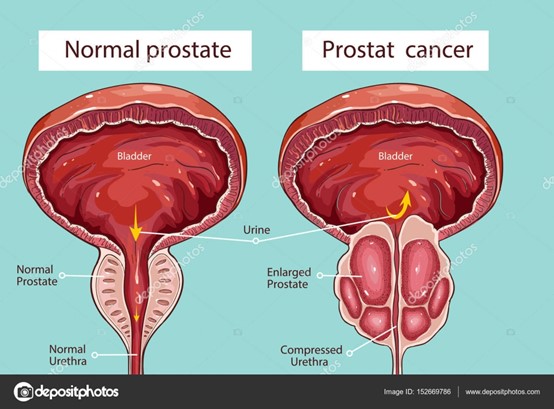
BHP can be relatively easily treated with PRAIUM Medical Solutions formulas (see below). Therefore, ignoring the above examples of first signs of a pathology constitutes an unnecessary detriment to one’s health.
Intake of chemical substances to overcome the difficulties in sexual function, such as Viagra, Cialis, etc. do NOT strengthen the bodily system. These substances cause extra stress, drowning the energy of an already compromised and weak system, damaging the hormonal delicate balance, further aggravating and deepening the pathology. Furthermore, these substances cause the acceleration of the pathological process, increasing the risk of an eventual prostate cancer. On the other hand, if the inflammation in the Kidney & Urinary system or in the prostate itself is timely diagnosed and properly treated, the said disturbing and disrupting symptoms will disappear too and the risk of a more sinister pathology developing is quelled.
Therefore, we strongly recommend to take proper notice, when any of the above said symptoms occur. IT IS NEVER TOO EARLY.